

- /
Written By: Erin Wall, San Antonio REALTOR® with LPT Realty
License Number: Texas - 833167
Date: October 1, 2026
If you look strictly at the numbers, the San Antonio real estate market currently shows a slight seller’s advantage. But numbers do not always tell the whole story. Based on what I am seeing with buyers, sellers, and homes sitting on the market, the experience right now feels much more like a buyer’s market.
Buyers have more choices, they are taking longer to make decisions, and they are being much more selective about what they are willing to pay for. At the same time, affordability is a real concern. Some buyers are hesitant to even get pre-qualified because they are worried about what their monthly payment will look like once you factor in the mortgage rate, property taxes, homeowners insurance, and everything else that comes with owning a home.
For sellers, this means the market requires a little more patience and a lot more strategy.
What the San Antonio Housing Numbers Show
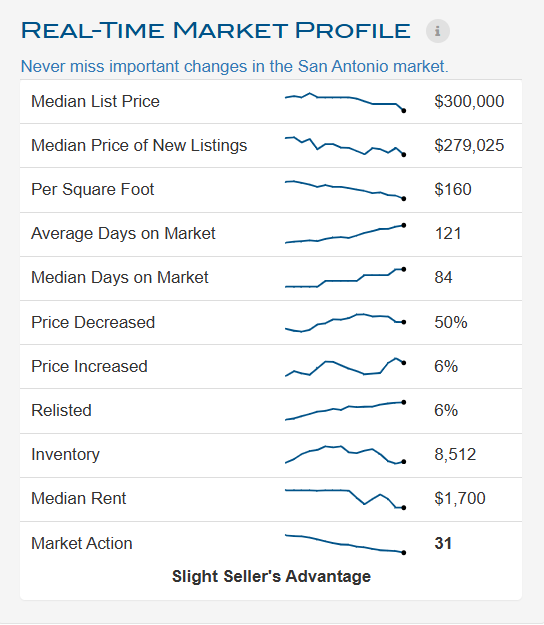
There are currently 8,512 homes in inventory in San Antonio, with a median list price of $300,000. The median price of new listings is $279,025, and homes are listed at a median of about $160 per square foot.
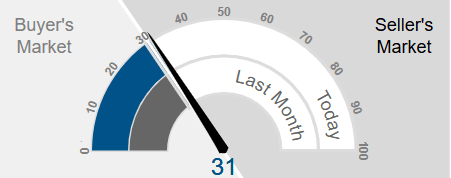
The Market Action Index is currently 31, which technically indicates a slight seller’s advantage. I think that statistic is worth mentioning because it shows why we cannot rely on a single number to decide whether a market favors buyers or sellers.
The actual behavior I am seeing tells a more complicated story. Buyers have options, and they know it. They can compare multiple properties, take more time to think about an offer, and walk away when the price, condition, or terms do not make sense for them.
Homes Are Sitting on the Market Longer
One of the biggest changes sellers need to understand is how long homes are taking to sell. The median days on market is currently 84 days, while the average is 121 days.
And it is not always because a home is wildly overpriced.
Even homes that appear to be priced correctly can sit longer than sellers expect. Buyers are simply behaving differently than they did when inventory was tight and competition was intense. They are looking closely at condition, updates, location, taxes, insurance costs, and how one property compares with everything else they can buy in the same price range.
That can be difficult for sellers who remember a market where homes received immediate attention and buyers felt pressure to act quickly. Today, putting a home on the market does not necessarily mean an offer is going to arrive within the first weekend or even the first few weeks.
Buyers Are Being Picky, and There Is a Reason
I hear the word "picky" used a lot when talking about today's buyers, but I think it is important to understand why.
Buying a home is expensive right now. When someone is looking at a substantial monthly payment, they are naturally going to pay closer attention to what they are getting for that money. Things buyers might have overlooked in a much more competitive market can become reasons to keep looking today.
That might be an older roof, dated flooring, needed repairs, an undesirable layout, high property taxes, or simply another house down the street that feels like a better value.
There is also another group of potential buyers who are interested in purchasing but have not taken the first step. Some are hesitant to get pre-qualified because they already assume buying will be too expensive. That hesitation matters because it means there can be people who want to buy a home but are sitting on the sidelines before they ever find out what their actual options are.
Getting pre-qualified does not mean you have to buy a house. It gives you real numbers so you can decide whether buying makes sense for you now, later, or not at all.
Price Reductions Are Becoming Common
One statistic that does line up with what I am seeing is the number of price reductions. About 50% of current listings have had a price decrease, compared with only 6% that have increased their price.
That does not mean San Antonio home values have dropped by 50%. It means half of the listings reflected in this market snapshot have had their asking price reduced.
For sellers, that is an important distinction. Sometimes a price reduction is the result of a home starting too high. Other times, the market simply does not respond the way the seller expected, even when the original price seemed reasonable based on comparable properties.
This is why pricing a home today requires more than looking at what the house next door sold for six months ago. Sellers also need to understand what is currently for sale, what has recently gone under contract, what has been sitting, and what buyers are choosing instead.
Seller Concessions Matter Right Now
Price is only one part of a real estate negotiation. I am also seeing seller concessions become an important part of getting transactions together.
Depending on the transaction and the buyer's loan program, concessions can potentially help with eligible closing costs or financing strategies such as a rate buydown. For a buyer who is more concerned about the monthly payment or the amount of cash needed at closing, that assistance may be more meaningful than a small reduction in the purchase price.
Sellers should not assume that offering concessions is necessary for every home. However, it is something worth considering when determining how to make a property more competitive, particularly if similar homes are offering incentives.
Mortgage Rates Are Making Buyers Think Twice
Mortgage rates are a big reason buyers are being cautious. According to the September 30 market snapshot provided by Mortgage News Daily, the 30-year fixed mortgage rate was 7.60%. The 15-year fixed was 7.22%, while 30-year FHA and VA rates were both shown at 7.25%.
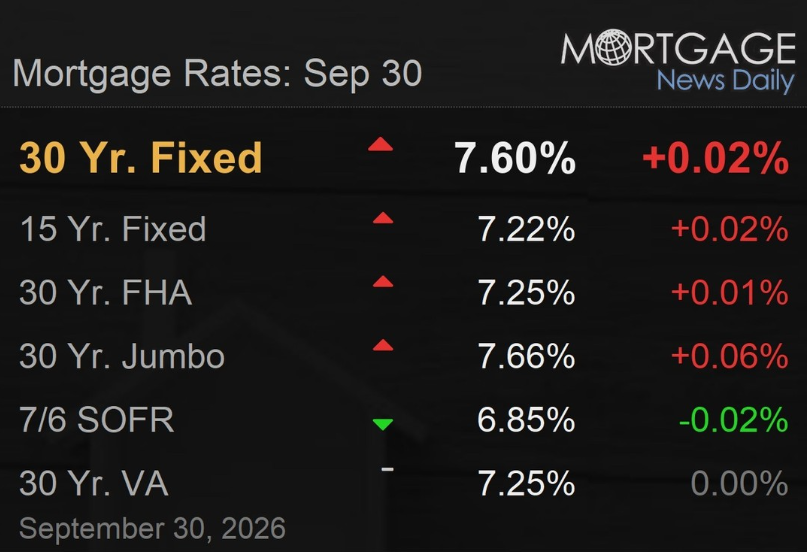
These are general market rates, not a quote for an individual buyer. A person's actual interest rate can vary based on credit, loan type, down payment, lender, points, and other factors.
Still, rates at these levels have a noticeable effect on affordability. Buyers are not just asking, "Can I afford a $300,000 house?" They are asking, "What is this house actually going to cost me every month?"
That is the number that matters.
What This Means for San Antonio Sellers
Selling a home in this market is absolutely possible, but expectations matter. Sellers should be prepared for the possibility that their home may take longer to sell than they initially hoped, even when they have done many things correctly.
Presentation matters. Pricing matters. Marketing matters. The competition matters. Being willing to respond to what the market is telling you also matters.
If buyers repeatedly tour a property but do not make offers, or if showings are significantly slower than comparable homes, that information should not be ignored. Sometimes the answer is price. Sometimes it is condition. Sometimes it is an incentive. Sometimes another property simply offers buyers more for the money.
The strategy should depend on what is actually happening with that particular home.
What This Means for San Antonio Buyers
For buyers who can comfortably afford to purchase, the current market may offer opportunities that were harder to find a few years ago. More inventory and longer market times can create room to negotiate, ask questions, compare properties, and potentially request concessions.
That does not mean every seller will accept a low offer or agree to every request. Some homes will still sell quickly, particularly when they are well priced, well maintained, and located in areas with strong demand.
The advantage buyers have right now is choice. Use it wisely. Instead of focusing only on getting the lowest possible price, look at the complete picture, including the home's condition, taxes, insurance, financing, potential repairs, and monthly payment.
The Market on Paper and the Market in Real Life Can Be Different
This is probably the biggest takeaway from the San Antonio housing market right now.
A market indicator can say there is a slight seller’s advantage while the actual experience of selling a home feels very different. We have 8,512 homes in inventory, a median market time of 84 days, and price reductions showing up on 50% of listings in the current snapshot. At the same time, buyers are dealing with borrowing costs that make affordability a serious consideration.
That combination creates a market where buyers can afford to be selective and sellers often need to be flexible.
Real estate is also extremely local. What is happening across San Antonio as a whole may not be what is happening in your neighborhood, your subdivision, or your price range. If you are thinking about buying or selling a home in San Antonio, the most useful information is not just the citywide statistics. It is what comparable homes are doing right now in the specific part of the market that affects you.
FROM OUR BLOG


Pre-Approved for a Home Loan? Why You May Not Want to Spend the Full Amount
Written By: Erin Wall, San Antonio REALTOR® with LPT RealtyLicense Number: Texas - 833167Date: October 1, 2026 Getting pre-approved for a mortgage is an exciting step in the homebuying process. You finally have a number that tells you approximately how much a lender may be willing to let you borrow,

How Halloween Decorations Can Affect Selling Your Home in October
Written By: Erin Wall, San Antonio REALTOR® with LPT RealtyLicense Number: Texas - 833167Date: October 1, 2026 October can be a fun time to sell a home in San Antonio. The weather is beginning to feel more comfortable, fall décor starts appearing around neighborhoods, and Halloween gives homeowners

October’s 7.6% Increase: What It Could Mean for San Antonio’s Economy and Housing Market
Written By: Erin Wall, San Antonio REALTOR® with LPT RealtyLicense Number: Texas - 833167Date: October 1, 2026 October is beginning with an economic number worth watching: Texas’ latest local sales tax allocations were up 7.6% compared with the same period last year. According to the Texas Comptroll

GET MORE INFORMATION