

- /
The Inspection Report: What Sellers Should Expect During the Option Period
Written By: Erin Wall, San Antonio REALTOR® with LPT Realty
License Number: Texas - 833167
February 27th 2026
For many sellers, the most stressful part of the transaction is not getting the offer. It is what happens after the contract is signed. In Texas, once a buyer enters the option period, they have the right to conduct inspections and negotiate repairs. This phase is designed to give buyers time to evaluate the property and decide how they want to move forward.
During the option period, the inspector’s role is to observe and document the visible condition of the home on the day of inspection. Inspectors are not there to pass or fail a property. They are there to reduce risk for the buyer. They examine structural components, major systems, and safety items, then produce a written report outlining their findings. Most reports are detailed and photo heavy. Even well maintained homes often generate lengthy reports.
A long inspection report is not a deal breaker. It usually means the home has been lived in, used, and naturally aged. Every home, even newer construction, has maintenance items and wear. The inspection process simply documents those items in a structured and sometimes technical format. When buyers see dozens of notes and photos, it can feel overwhelming at first.
It is also important to understand how inspectors word findings. You may see phrases such as “damaged but functional” or “operational at time of inspection.” That language often means the component works, but shows wear or could require attention in the future. Inspectors frequently use cautious phrasing to limit liability. Their reports are designed to identify potential risk, not to predict immediate failure.
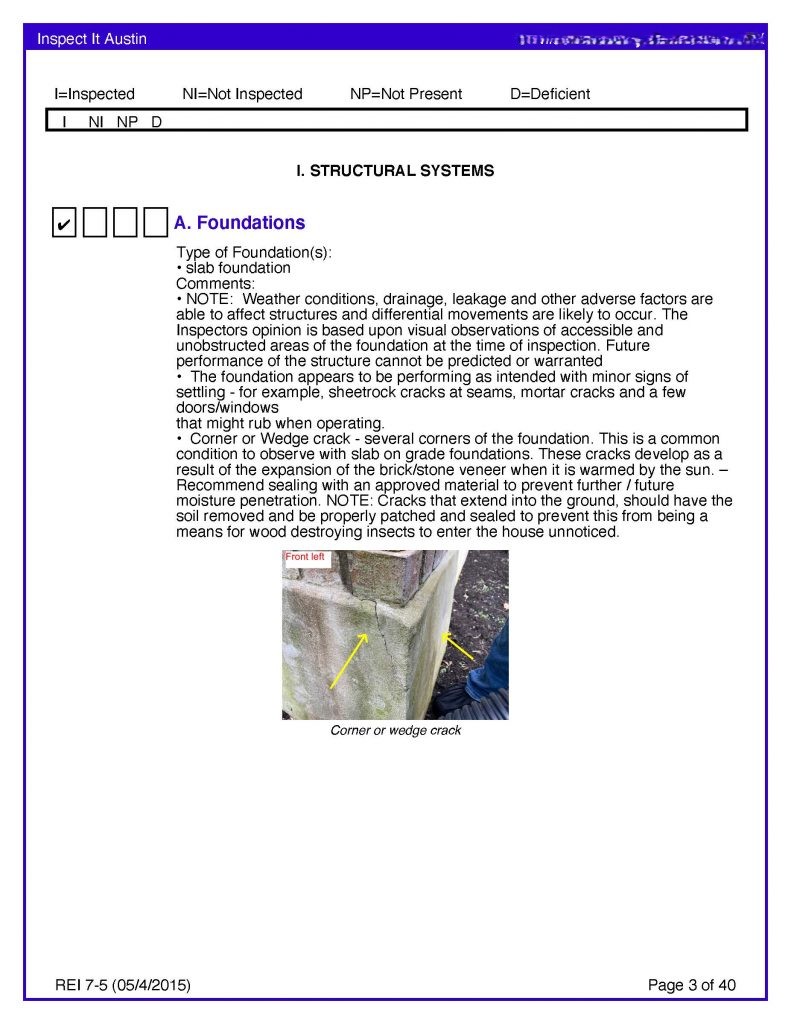 Example Inspection Report: Foundation Section.
Source: Inspect It Austin
From a negotiation standpoint, most inspection discussions narrow down to five major categories: foundation, the roof, HVAC system, electrical, and plumbing. These systems carry the greatest financial and safety impact. An older HVAC unit that is still functioning but nearing the end of its typical lifespan may prompt a credit request. A roof with visible wear may become a point of negotiation. Foundation movement, water intrusion, or electrical hazards are taken more seriously than minor cosmetic concerns.
Buyers agents will submit a negotiation for repairs with the listing agent based off what the buyer may want the seller to fix prior to closing. That does not mean the seller must agree to everything. Repair negotiations are exactly that, negotiations. Sellers may choose to make certain repairs, offer a credit at closing, adjust the price, provide service records or warranties, or decline items they believe are minor or cosmetic. The strength of each side’s position depends on market conditions, the attractiveness of the property, and how serious the findings are.
Insurance can also become part of the conversation. Certain items, especially roofs, may affect a buyer’s ability to secure homeowners insurance or impact the premium. In some cases, insurance carriers require repairs before issuing a policy. This is more common with aging roofs or outdated electrical panels. When that happens, the repair discussion shifts from preference to necessity, because financing often depends on insurability.
In most transactions, inspection negotiations end in compromise. Deals typically fall apart only when there are significant structural or system failures, or when expectations are far apart. Minor maintenance issues rarely stop a sale.
The inspection period is not designed to penalize sellers, it exists to create transparency. A home that has been loved and lived in will show signs of use. The end goal is not perfection, it is to provide the buyer clarity and reasonable expectations. When handled calmly and strategically, the inspection phase becomes a manageable step toward closing rather than a threat to the transaction.
FROM OUR BLOG


San Antonio Real Estate News: What Buyers, Sellers, and Homeowners Should Know in October 2026
Written By: Erin Wall, San Antonio REALTOR® with LPT RealtyLicense Number: Texas - 833167Date: October 1, 2026 If you look strictly at the numbers, the San Antonio real estate market currently shows a slight seller’s advantage. But numbers do not always tell the whole story. Based on what I am seein

Pre-Approved for a Home Loan? Why You May Not Want to Spend the Full Amount
Written By: Erin Wall, San Antonio REALTOR® with LPT RealtyLicense Number: Texas - 833167Date: October 1, 2026 Getting pre-approved for a mortgage is an exciting step in the homebuying process. You finally have a number that tells you approximately how much a lender may be willing to let you borrow,

How Halloween Decorations Can Affect Selling Your Home in October
Written By: Erin Wall, San Antonio REALTOR® with LPT RealtyLicense Number: Texas - 833167Date: October 1, 2026 October can be a fun time to sell a home in San Antonio. The weather is beginning to feel more comfortable, fall décor starts appearing around neighborhoods, and Halloween gives homeowners

GET MORE INFORMATION