

Mortgage Rates Climbed, and San Antonio's Housing Market Felt the Pressure. What Happens Next?
Written By: Erin Wall, San Antonio REALTOR® with LPT Realty
License Number: Texas - 833167
Date: November 2, 2026
If you've been keeping an eye on mortgage rates lately, you've probably noticed how quickly things can change. Just when buyers start feeling a little more comfortable with the idea of purchasing a home, rates move again, monthly payment estimates change, and suddenly that house they were considering doesn't look quite as affordable.
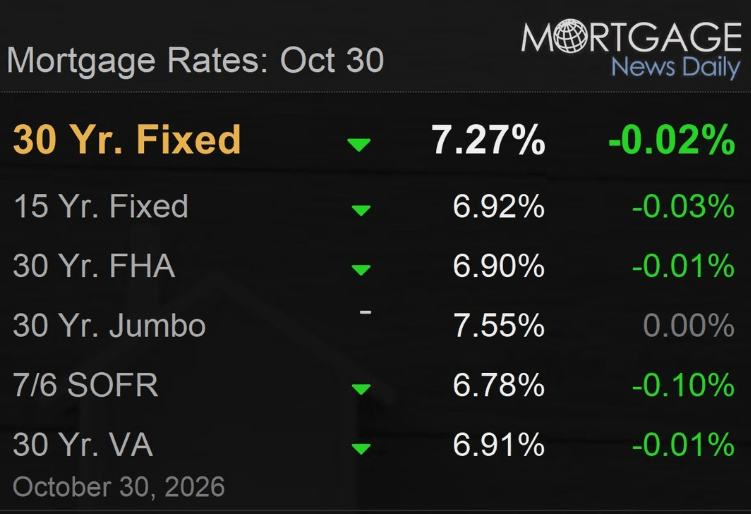
That's been part of the story in San Antonio this fall. Mortgage rates climbed during September and early October, putting additional pressure on buyers who were already balancing home prices, property taxes, insurance, and everyday living expenses.
And while rates have recently shown some improvement, the effects of higher borrowing costs don't disappear overnight. San Antonio's housing market has slowed compared with last year, and sellers are having to think more carefully about pricing and competition.
So, what exactly is happening, and what does it mean if you're thinking about buying or selling a home?
Mortgage Rates Rose This Fall, but They've Recently Pulled Back
Mortgage rates have had a pretty bumpy year.
After falling below 6% earlier in 2026, the national average 30-year fixed mortgage rate climbed to approximately 7.4% in early October. That was a significant change in borrowing costs over a relatively short period.
Fortunately, rates have eased somewhat since that peak. According to Freddie Mac, the national average 30-year fixed mortgage rate was 7.24% as of October 29, 2026, down from 7.32% the previous week.
For perspective, that same average was 6.17% a year earlier. So even with the recent improvement, today's borrowing costs remain noticeably higher than they were last fall.
National 30-year fixed mortgage rate
Oct. 2025
6.17%
Early Oct. 2026
~7.40%
Oct. 29, 2026
7.24%
It's worth remembering that mortgage rates aren't directly controlled by the Federal Reserve. They respond to several economic factors, including inflation expectations, bond markets, and the broader economic outlook.
That means even when the Federal Reserve makes a decision about its benchmark interest rate, mortgage rates don't necessarily move in the same direction.
For buyers, this unpredictability makes planning a little more complicated. For sellers, it can mean the number of people actively shopping for homes changes as borrowing costs fluctuate.
What Higher Mortgage Rates Actually Do to a Monthly Payment
A mortgage rate changing by half a percentage point might not sound like a big deal. But when you're financing a home over 30 years, even a relatively small increase can make a noticeable difference.
Let's look at a hypothetical buyer purchasing a $300,000 home with 5% down, leaving a $285,000 mortgage.
|
Interest rate |
Monthly principal & interest |
|---|---|
|
6.00% |
$1,709 |
|
6.50% |
$1,801 |
|
7.00% |
$1,896 |
|
7.50% |
$1,993 |
Illustrative 30-year fixed-rate calculations, rounded to the nearest dollar. Excludes property taxes, homeowners insurance, mortgage insurance, HOA dues, and closing costs. Rates are examples, not loan offers.
Going from 6% to 7.5% increases the principal and interest payment by approximately $284 per month, or about $3,400 per year.
And that's before accounting for the other costs of homeownership.
This is why I always encourage buyers to think about their comfortable monthly payment rather than focusing entirely on the maximum purchase price a lender might approve. Qualifying for a certain amount and feeling financially comfortable with that payment are two different things.
San Antonio's Housing Market Is Feeling the Pressure
We're seeing signs of a slower market here in San Antonio, although it's important to understand that interest rates aren't the only reason.
According to September 2026 housing data from the San Antonio Board of REALTORS®, reported by Texas Public Radio:
-
Home sales were down approximately 2% compared with September 2025.
-
The median home price also declined approximately 2%, landing just below $302,000.
-
The market had approximately six months of housing inventory.
-
Homes were spending nearly three months on the market on average.
These numbers suggest buyers have more choices and more time to evaluate their options than they did during the extremely competitive markets of previous years.
And while mortgage rates play a role, affordability goes beyond the loan itself. Property taxes, insurance premiums, household expenses, and uncertainty about future finances can all influence whether someone feels ready to purchase.
I think that's an important distinction. It's tempting to blame every slowdown on interest rates, but the reality is more complicated.
A buyer might technically qualify for a mortgage and still decide that the monthly payment leaves too little breathing room. Others may be waiting to save more money, pay down debt, or see whether home prices become more favorable.
Sellers Are Having to Adjust Their Expectations
One of the biggest differences between today's market and the frenzy of a few years ago is that simply putting a home on the market doesn't guarantee immediate attention.
When buyers are dealing with higher borrowing costs, they're often more selective about what they're willing to pay. A home that's priced appropriately and presented well can still attract interest, but properties that are priced above comparable homes may struggle to generate showings.
That can lead to longer listing periods, price reductions, or negotiations over closing costs and repairs.
For sellers, I believe this makes the initial pricing strategy especially important.
Pricing a home too high with the expectation that someone will eventually negotiate down can backfire. Buyers have access to competing listings, recent sales information, and online pricing histories. If a home sits for weeks without meaningful activity, buyers may begin wondering why.
The goal shouldn't necessarily be to list at the highest possible number. It should be to position the home competitively enough to attract qualified buyers while still protecting the seller's financial interests.
And that strategy is going to look different depending on the neighborhood, property condition, price range, and available competition.
Does a Slower Market Mean Buyers Have the Advantage?
In some situations, yes. But I wouldn't go as far as saying every home in San Antonio is suddenly a bargain.
A slower market can give buyers opportunities that were much harder to find when homes were receiving multiple offers within days of being listed.
Buyers may have more time to compare properties, request inspections, negotiate repairs, or ask sellers to contribute toward closing costs. Depending on the property and the seller's circumstances, there may even be opportunities to negotiate a temporary or permanent mortgage rate buydown.
However, none of these concessions are guaranteed. A well-priced home in a desirable location can still attract strong interest, even when the broader market is moving slowly.
The key is understanding the individual property rather than assuming every seller is desperate to negotiate.
Should Buyers Wait for Mortgage Rates to Drop?
This is probably one of the most common questions in real estate, and I understand why.
Nobody wants to purchase a home at 7% only to watch rates fall significantly a few months later. At the same time, waiting for the perfect interest rate doesn't guarantee a better financial outcome.
If rates fall, more buyers could return to the market, potentially increasing competition. But that isn't guaranteed either. Home prices, inventory, and economic conditions will all influence what happens next.
I would much rather see someone purchase a home because the payment works for their finances today than because they're counting on refinancing later.
Refinancing can be a valuable opportunity if rates decline, but it comes with costs, qualification requirements, and no guarantee that better terms will become available.
If buying now would stretch your budget too thin, waiting may be the smarter choice. But if you've found a home that fits your needs, have stable finances, and can comfortably afford the payment, today's market may offer negotiating opportunities worth exploring.
What Should San Antonio Sellers Do Right Now?
For homeowners considering selling, I wouldn't interpret a slower market as a reason to give up on listing. I would interpret it as a reason to be more intentional.
The days of relying on rapid appreciation or limited inventory to drive offers are not the conditions sellers should automatically expect today.
Instead, I would focus on three things: accurate pricing, strong presentation, and flexibility.
Accurate pricing means looking at what comparable homes have actually sold for, not just what other sellers are asking. Strong presentation means professional photography, thoughtful marketing, and making the home as appealing as possible before it hits the market.
Flexibility might involve negotiating repairs, adjusting a price when the market provides clear feedback, or considering closing-cost contributions when they make financial sense.
None of that means a seller has to accept an unreasonable offer. It simply means understanding that buyers have alternatives and giving them a compelling reason to choose your property.
Where Could Mortgage Rates Go From Here?
The short answer is that nobody knows for certain.
The recent decline in rates is encouraging, but one or two weeks of improvement doesn't establish a long-term trend. Inflation, Treasury yields, employment data, and Federal Reserve expectations can all influence where mortgage rates go next.
As of late October, the national 30-year fixed-rate average remained above 7%, even after declining from its earlier October peak.
I wouldn't make a major real estate decision based entirely on a prediction about what rates might do next month.
Instead, I'd pay attention to the combination of interest rates, local inventory, home prices, and personal financial readiness. Those factors together tell us much more than any single mortgage-rate headline.
What This Means for San Antonio Moving Forward
San Antonio's housing market hasn't stopped. It's adjusting.
Higher borrowing costs have made affordability more challenging, and buyers are taking a closer look at the financial commitment of homeownership. Sellers, meanwhile, are navigating a market where pricing and presentation matter more than ever.
The recent easing in mortgage rates could help some buyers regain purchasing power, but that doesn't mean the market will immediately return to the conditions we saw several years ago.
For buyers, the opportunity may be having more choices and greater negotiating flexibility. For sellers, success may come down to understanding current competition and being realistic about pricing.
Whether you're planning to buy next month, sell next spring, or simply keeping an eye on the market, I believe the best decisions come from understanding the numbers rather than reacting to headlines.
And if you're curious about what these changes mean for your specific home or price range in San Antonio, I'm always happy to help you take a closer look.
FROM OUR BLOG


2026 Midterm Elections: Which Bexar County Offices Affect Real Estate?
2026 Midterm Elections: Which Bexar County Offices Affect Real Estate? Written By: Erin Wall, San Antonio REALTOR® with LPT Realty License Number: Texas - 833167 Date: November 2, 2026 Election season tends to focus heavily on national politics, but when it comes to owning, buying, selling, or inves

What Does “Shortages in Area” Mean When Buying a Home in Texas? Understanding Survey Coverage and Title Insurance
What Does “Shortages in Area” Mean When Buying a Home in Texas? Understanding Survey Coverage and Title Insurance Written By: Erin Wall, San Antonio REALTOR® with LPT RealtyLicense Number: Texas - 833167Date: November 2, 2026 When you're purchasing a home in Texas, there's a lot of paperwork to revi

Things to Do in San Antonio in November 2026: Festivals, Holiday Lights & Local Favorites
Things to Do in San Antonio in November 2026: Festivals, Holiday Lights & Local Favorites Written By: Erin Wall, San Antonio REALTOR® with LPT RealtyLicense Number: Texas - 833167Date: November 2, 2026 November is one of those months when San Antonio really starts to feel like a different city. The

GET MORE INFORMATION